

Speech Therapy at Home in Southeast Idaho
Helping You Communicate, Think and Swallow More Safely at Home
When an illness, stroke, injury or neurological condition affects your ability to communicate, remember information or swallow safely, everyday life can suddenly become much more difficult.
Having a conversation. Remembering an appointment. Following directions. Telling someone what you need. Enjoying a meal with your family.
These aren’t small things. They’re part of how you connect with the people around you and maintain your independence.
Alliance Speech-Language Pathologists provide personalized speech therapy in the comfort of your home to help you strengthen these important everyday abilities.

When Everyday Communication Becomes a Challenge
You know what you want to say—but the words won’t come.
You lose track of conversations or have trouble remembering information that used to come easily.
Family members have difficulty understanding you.
Or eating and drinking have become uncomfortable or concerning.
Changes like these can be frustrating for both patients and the people who care about them.
You don’t have to navigate those changes alone.
Alliance works with patients and families to understand what’s happening, identify meaningful goals and develop practical strategies that can make everyday life safer and more manageable.
Speech Therapy Is About More Than Speech
Speech-Language Pathologists work with much more than pronunciation.
They evaluate and treat challenges involving speech, language, communication, memory, cognition, voice and swallowing.
Depending on your individual needs, speech therapy may include:
- Speech and language rehabilitation
- Cognitive-communication therapy
- Memory and problem-solving strategies
- Swallowing therapy
- Voice and fluency treatment
- Communication strategies
- Strategies for safer eating and drinking
- Education and support for family members and caregivers
Your treatment plan is personalized around your diagnosis, abilities, goals and everyday life.

Who Can Benefit From Speech Therapy at Home?
Speech therapy may be appropriate when an illness, injury or change in health affects communication, memory, thinking or swallowing.
Patients may benefit from speech therapy after or while managing:
- Stroke
- Brain injury
- Parkinson’s disease
- Dementia or other cognitive changes
- Neurological conditions
- Serious illness or prolonged hospitalization
- Changes in memory or problem-solving abilities
- Difficulty speaking or understanding language
- Difficulty swallowing food, liquids or medications
If you’ve noticed a change in your ability—or your loved one’s ability—to communicate, remember important information, follow directions or swallow safely, talk with your healthcare provider about whether a speech therapy evaluation may be appropriate.
Find Your Words. Stay Connected.
Communication affects so much more than our ability to speak.
It’s how we tell someone what we need. Share a story. Ask a question. Participate in a conversation. Connect with the people we love.
When communication becomes difficult, it can affect confidence, relationships and independence.
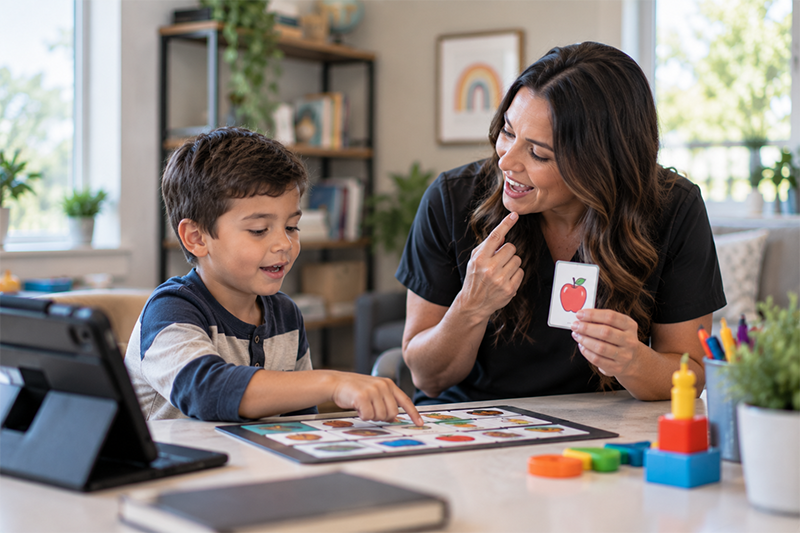
Our Speech-Language Pathologists work with patients experiencing challenges such as finding the right words, speaking clearly, understanding language or expressing their thoughts and needs.
Therapy may help you:
- Improve speech clarity
- Find and express words more effectively
- Better understand conversations and directions
- Develop alternative communication strategies
- Build confidence during everyday communication
And because therapy happens at home, we can focus on the real conversations and situations that are part of your everyday life.
The goal isn’t simply to practice words. It’s to help you communicate what matters.
Support for Memory, Thinking and Everyday Tasks
Speech therapy can also help when changes in memory or thinking make everyday life more challenging.
You may have trouble remembering appointments, following several steps in order, staying focused, organizing your day or solving problems that once felt routine.
Our Speech-Language Pathologists can help develop practical strategies that support:
- Memory
- Attention and concentration
- Problem-solving
- Organization
- Planning
- Safety awareness
- Following directions
We work with both patients and caregivers to find strategies that can become part of everyday routines.
Because the goal isn’t to get better at an exercise. It’s to make everyday life easier to manage.

Making Mealtimes Safer and More Comfortable
Difficulty swallowing can affect more than eating.
It can impact nutrition, hydration, comfort and safety—and it can turn something as simple as sharing a meal into a source of worry.
Our Speech-Language Pathologists can evaluate swallowing concerns and provide therapy and education designed to help patients manage food, liquids and medications more safely.
Treatment may include:
- Swallowing assessments
- Exercises and techniques that support swallowing function
- Recommendations for safer eating and drinking
- Education for patients and caregivers
- Strategies to help reduce swallowing-related complications
If you or a loved one is coughing or choking while eating or drinking, having difficulty swallowing, or is concerned about food or liquids “going down the wrong way,” talk with your physician or healthcare provider about whether speech therapy may be appropriate.
Therapy That Fits Into Your Everyday Life
One of the biggest advantages of receiving speech therapy at home is that your therapist gets to work with you where communication, memory and swallowing actually happen.
Instead of focusing only on exercises in an unfamiliar environment, therapy can be connected to your normal routines.
That might mean working on:
- Communicating with your spouse or family
- Remembering appointments or medications
- Following your normal morning routine
- Organizing important information
- Understanding everyday instructions
- Communicating your wants and needs
- Safely eating meals in your own kitchen
Your home provides real situations where new skills and strategies can be practiced.
That makes therapy personal, practical and focused on the things that matter most to you.

Supporting the People Who Support You
Changes in communication, memory or swallowing don’t affect only the patient.
They can also be difficult for spouses, children and other caregivers who are trying to understand how best to help.
That’s why family and caregiver education can be an important part of speech therapy.
Your therapist may help the people around you better understand your challenges, learn communication strategies and incorporate helpful techniques into your normal routines.
Progress doesn’t have to happen alone.
One Team Supporting Your Care at Home
Speech therapy may be one part of a larger care plan.
Depending on your needs, Alliance can also coordinate services such as:
Our nurses can help:
- Skilled Nursing
- Physical Therapy
- Occupational Therapy
- Wound Care
- Post-Surgical Care
- Personal Care Services
Because these services are available through one organization, your care can be coordinated around your changing health, safety and independence.
You don’t have to figure out every part of your care on your own.

Your Health Starts Here
Flexible appointments and answers to your questions.
Or call — (208) 552-0249